
During my sandwich year at university, my employer proposed acting as the client for my dissertation project. They wanted a game development tool to simulate evolution for one of their game ideas, and I agreed to develop it.
The project consisted of two parts: the core evolution simulation, which was the main focus, and a test bed to demonstrate its features. The test bed was designed to be modular, so users could easily remove or replace its components without affecting the simulation itself.
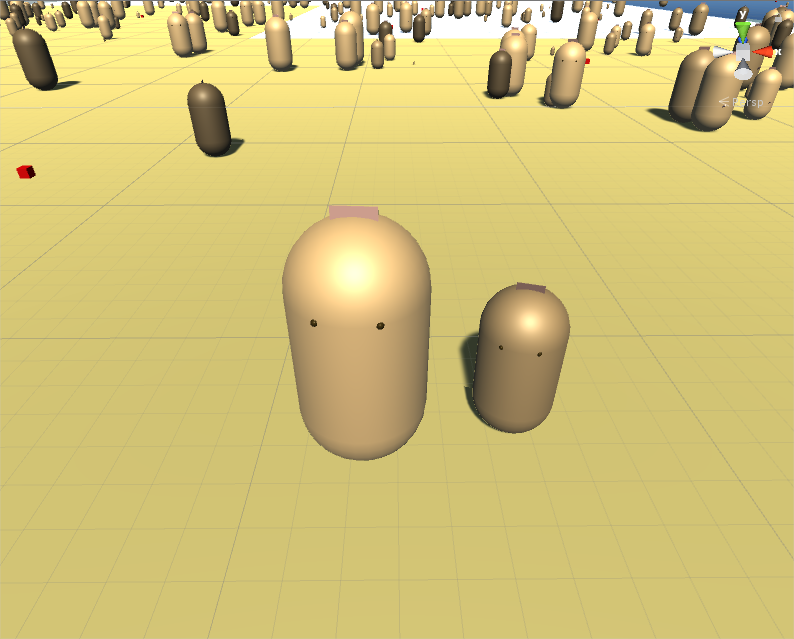
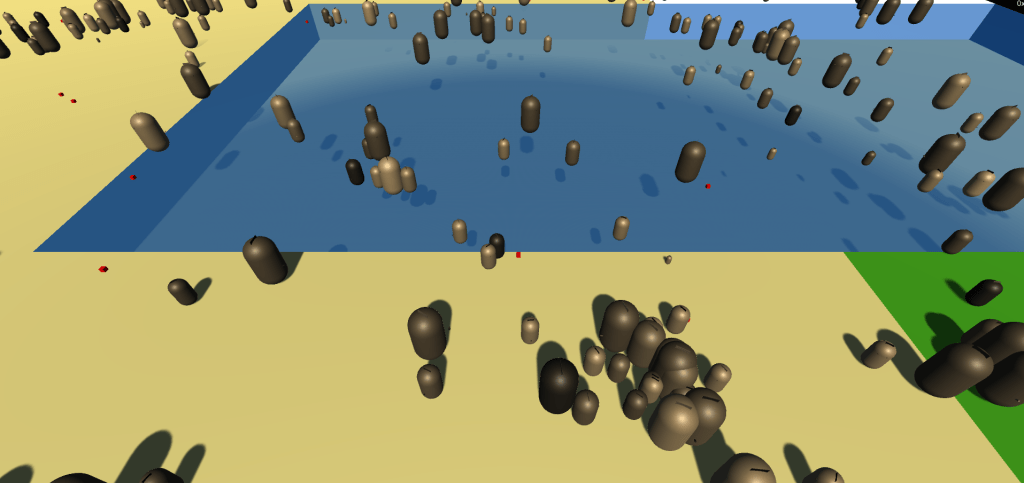
The test bed included visual representations of creatures and a simplistic AI to show basic behaviours. Most of the work was dedicated to the evolution system. Creatures in the simulation possess different traits, enabling them to adapt better to certain biomes. Food, represented as small red cubes, interacts with the environment, influencing creature behaviour. Well-fed creatures reproduce, passing on traits to their offspring, with occasional mutations allowing evolution to occur over time. Some creatures may wander to neighbouring tiles, adding variation to population dynamics.
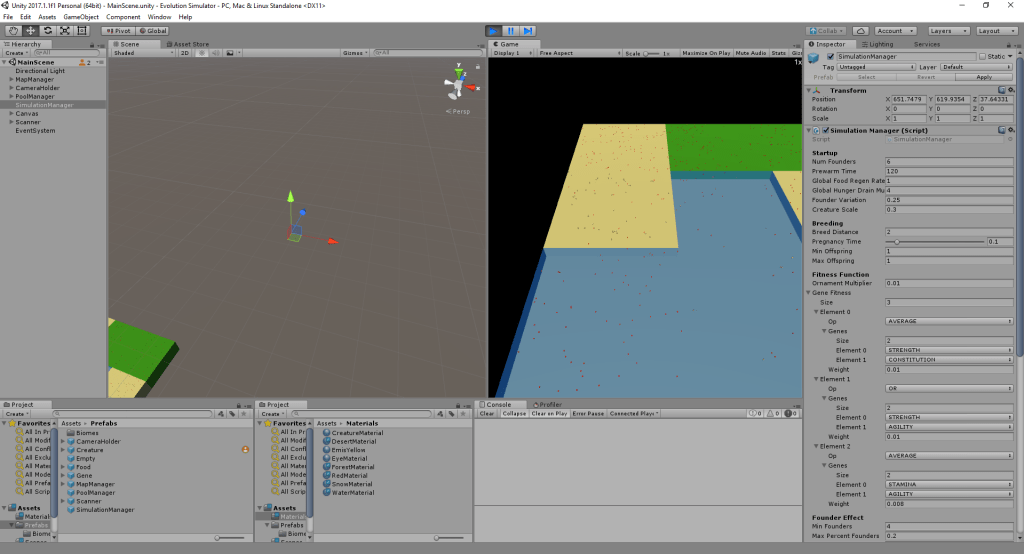
Although the test bed could not fully demonstrate the tool’s potential, it effectively showcased the mechanics, allowing users to observe evolution and the impact of different environmental factors. The simulation relies on further data input from users to realise its full capabilities, serving as a foundation for more complex scenarios.

 Stefan Yeung